Simple Solutions That Keep My Sewing Room Organized (and My Scissors Safe)
A real-life look at the tools and simple systems that help keep a sewing room organized, even when life gets messy. From clear storage bins and pegboards to a dedicated cutting station and hard-learned lessons about “borrowed” scissors, this post shares practical ways to bring order to your creative space without aiming for perfection. Perfect for sewists who want more ease, less clutter, and a space that actually works for everyday life.
SEWING
5/6/20263 min read
There’s a certain kind of chaos that only happens in a sewing room.
It starts innocent enough—just a few projects laid out, maybe a half-finished quilt on one chair and a pile of fabric “I’ll definitely fold later” on another. But before you know it, your rotary cutter is missing, your good scissors are dull again, and you’re pretty sure your seam ripper has gone on vacation without telling you.
At least that’s how it goes in my house.
I swear I label things. I try to have systems. And yet somehow my kid will “just borrow” my fabric scissors for a quick school project, and they come back like they’ve been used to cut cardboard in a hurricane. Every. Single. Time.
So over the years, I’ve slowly learned that staying organized in a sewing room isn’t about perfection—it’s about creating little systems that survive real life.
Here are the tools that actually help me keep my sewing space from turning into total chaos.
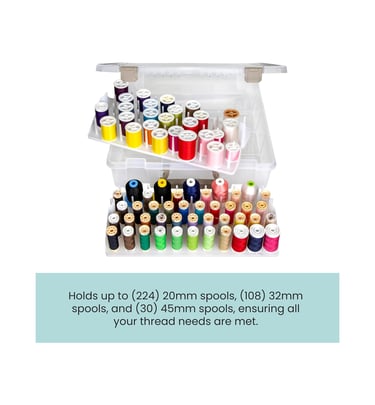
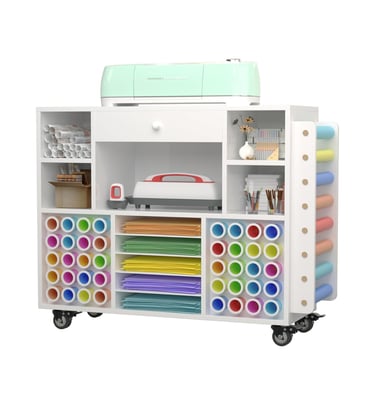
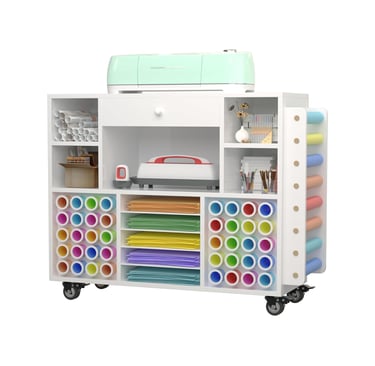
Clear containers (because I will forget what I own)
I used to keep everything in cute baskets. It looked nice… until I couldn’t find anything.
Now I use clear bins for fabric, notions, and “in-progress” projects. Not glamorous, but when I can see that I already own three packages of black thread, it saves me from buying a fourth one at the store like I always do.
The real win? Labeling them. Even if it’s just masking tape and a Sharpie. Future me is not reliable.
A dedicated scissors system (and a hiding place)
Let’s talk about scissors.
Fabric scissors are sacred. At least they should be.
After one too many rounds of my kid borrowing them for “just five minutes” and returning them dull enough to chew through fabric instead of cut it, I finally set up a rule: if it cuts fabric, it lives in my sewing room.
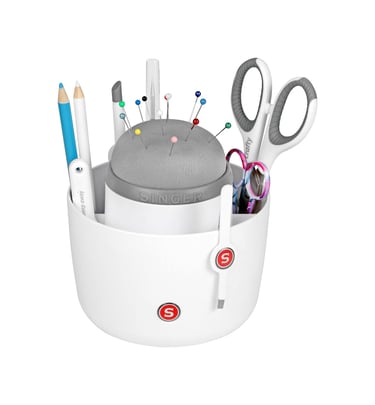
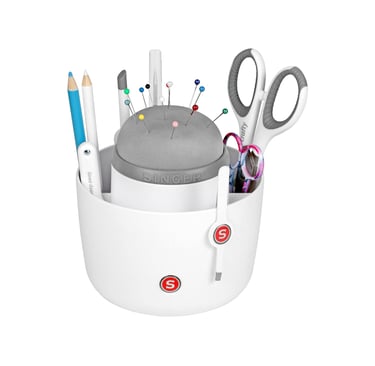
I keep mine in a tall jar on a high shelf. Not because I’m fancy—but because I’m strategic. If someone has to go looking for a stool, they’re less likely to “accidentally” grab them.
And yes, I also have a second, clearly labeled pair of “okay to be abused” scissors for everything else. It’s survival.
A pegboard for tools that like to disappear
Rotary cutters. Seam rippers. Measuring tape that vanishes into thin air.
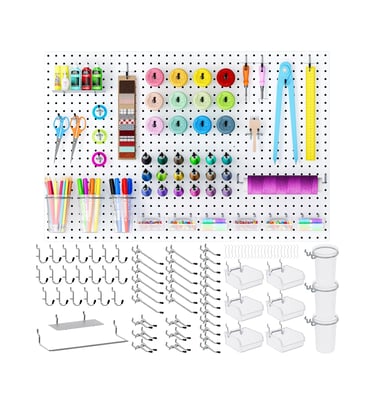
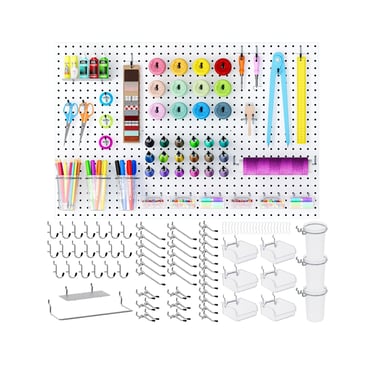
A pegboard changed everything for me.
I hang the tools I use most often right where I can see them. It’s not just organized—it’s a visual reminder of what I actually own, which is helpful because I tend to rebuy things I can’t immediately locate.
It also makes the room feel a little like a creative studio instead of a disaster zone, which helps more than I expected.
A “current project” basket (for unfinished life)
This might be the most important thing I’ve ever added.
Instead of letting half-finished projects spread across every flat surface, I keep one large basket just for what I’m actively working on. If it doesn’t fit in the basket, it doesn’t stay out.
It sounds simple, but it keeps me from walking into my sewing room and immediately feeling like I’ve failed at life.
Because nothing kills creativity faster than guilt over unfinished quilts staring at you from every direction.
A cutting station that doesn’t move
I used to cut fabric wherever there was space. Kitchen table, living room floor, occasionally the hallway if things got desperate.
Now I’ve learned: a dedicated cutting area is worth it. Even if it’s just a folding table with a cutting mat that never gets put away.
It saves time, saves my back, and somehow also reduces the amount of “mystery fabric scraps” that used to appear everywhere like confetti.
The real secret: systems that work when you’re tired
The truth is, I don’t stay perfectly organized.
There are still days when I walk in and find thread tangled around something it absolutely should not be tangled around. There are still times I have to ask, out loud, “why is the iron in the bathroom?”
But the difference now is that I have systems that catch me when I’m messy.
Clear bins. A pegboard. A scissors rule born from frustration and dull blades. A basket that holds my unfinished life in one place instead of five.
It’s not about having a Pinterest-perfect sewing room.
It’s about making sure that when I finally sit down to sew, I can actually find what I need—and maybe even enjoy the process before someone borrows my scissors again.
This post may contain affiliate links. If you make a purchase, I may earn a small commission at no extra cost to you. Thank you for supporting my blog!